
Not because the author was trying to stir up frustration, but because they held up a mirror to something you love—and the reflection was hard to see.
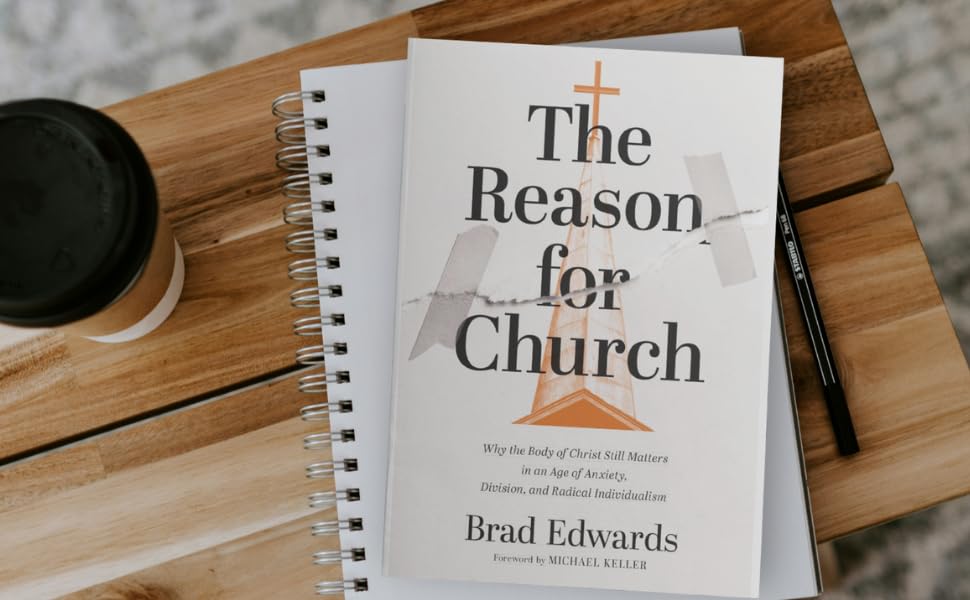
That’s how I felt reading the first half of The Reason for Church: Why the Body of Christ Still Matters in an Age of Anxiety, Division, and Radical Individualism (April 2025). Every chapter peeled back the cultural layers that have crept into how we see church—and it made me mad.
A ministry bestie who serves on staff at another church told me their staff was reading it together, so I grabbed a copy, too. We’ve had some great conversations over holy guacamole and queso over previous books. This one will be emotional.
The book begins with this idea: individuality has metastasized into individualism—a deep commitment to self-definition. And now, just like our playlists and social feeds, we expect the local church to be curated and customized to fit me.
Whatever that even means.
The author pulls no punches—starting with the Tower of Babel and moving through the seeker-sensitive movement, the rise of the “sacred self” (my own intuition is my north star and will guide me to what is best for me), and the consumer mindset that’s shaped much of American Christianity. We’ve discipled people to think of church as a spiritual vending machine aka a spiritual non-profit. And yet, we wonder why our discipleship feels shallow and anemic—when we’ve trained ourselves to sip from the well of living water instead of sink deep into the life of the Church.
Here’s what’s worse: in a world where “I feel, therefore it’s true” is a guiding belief, correction and instruction feels like harm. If you make me feel bad about myself or speak God’s truth in love to me, I’ll just cut you out of my life. When a teen calls family devotions “religious trauma,” or every boundary gets labeled “hurt,” we need to ask: are God’s people still open to conviction? Repentance? Growth? Instruction? Sanctification? Healing? Or is the church merely a service-provider?
Yes, real wounds exist. So does spiritual immaturity. Both can show up in the same room.
And counterfeit communities—especially online or on the field—offer quick belonging while slowly unmaking disciples. Algorithms feed our outrage. “Community” gets confused with comment sections. Practices and coaches take priority on the family calendar and finances. It’s all noise, and it’s numbing. It’s lonely, and it’s exhausting.
So yes, I got angry at what we’ve let shape her, the Bride of Christ.
But I kept reading—and the second half of the book makes me want to shout from the back row and toss glory confetti all over the place.

The church is still God’s idea to save the world. A greenhouse for exiles. A place where we learn to ask for help, live in covenant, and drink deeply of Christ’s love together—not in isolation. It’s where we’ll encounter hospitable and kind people of all generations who choose to accept you based on what Christ says about you without judgment of your past experiences. (Ephesians 1:6)
The author offers: If we want resurrection life, we must devote ourselves to the Bride of Christ as fully as He did—to the point of death. (Philippians 2:8) And we can’t claim to carry our cross if we won’t carry each other in sacrifice, through inconvenience, setting aside personal desires, expectations, and preferences.
I’ve got 50 pages left—and a lot more to process. The best part? This is a book which speaks so positively about the church and cheers on God’s plan to redeem the world through her. I love the church and Brad Edwards does an exceptional job of speaking well of her, The Bride of Christ. So very well of her!
Part two is coming. And probably more queso.
“They (all, together) devoted themselves (fully, together) to the apostles’ teaching (receive instruction), the fellowship (spiritual greenhouse), to the breaking of bread (Jesus), and the prayers (actively depending on Him), (Acts 2:42). Whatever metaphor we use, the early church was absolutely not a spiritual buffet from which individual believers picked dis-integrated ingredients. “Awe” is not on the other side of a balanced spiritual diet. That’s individualism talking. Instead, what Luke is describing is individuals called out from every tribe, tongue, and nation to become part of God’s “great nation” (Genesis 12). p. 143
 DeDeBullReilly