
The purpose of Hallelujah Camp was simple and focused: to practice and prepare a children’s Christmas presentation for worship the very next day. It was a four-hour, bring-your-own-lunch camp on Saturday from 10am–2pm, all leading to a four-minute+ presentation in Sunday worship.
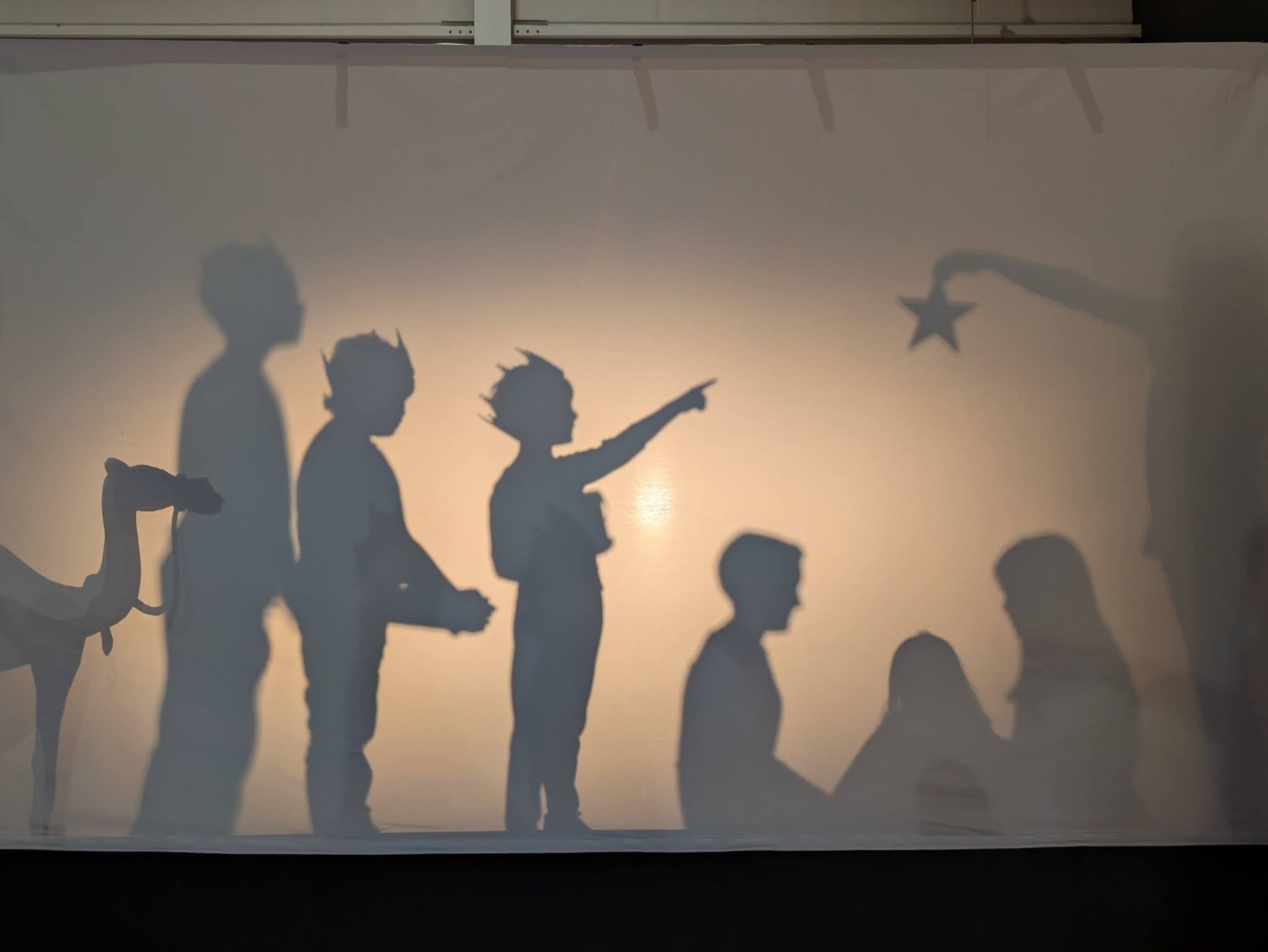
The idea was inspired by a children’s shadow presentation I had seen online last year and hoped to replicate. Hosting the camp the day before nearly guaranteed student participation, and parents clearly understood the expectation when they registered for any children ages kindergarten through fifth grade.
We had just celebrated our Live Nativity the previous Sunday, so costumes were already on hand. We added only a few simple props—two trumpets, a star, shepherd staffs, a plush baby, and a camel cutout easily prepared by their creative Bible study teacher.
The Wednesday evening before camp, the director and I met with our worship, music, and tech leaders to coordinate shared space, lighting, sound, spotlight placement, and the screen needed for a true shadow effect. On this particular Sunday we were also enjoying the seasonal choir with their community program that Sunday night, Confirmation, baptism, and membership on top of all the other Sunday morning worship goodness. Logistics were a premium consideration in that shared space. These servant leaders were gracious, helpful, and wonderfully resourceful. A follow-up email outlining our plan—along with a link to the original shadow play for visual reference—helped ensure everyone was aligned.
Camp day flowed like this:
- 10:00am – Students arrival with lunch and water bottles
- 10:15am – Watch the original shadow play; assign parts; group students into “actor teams”
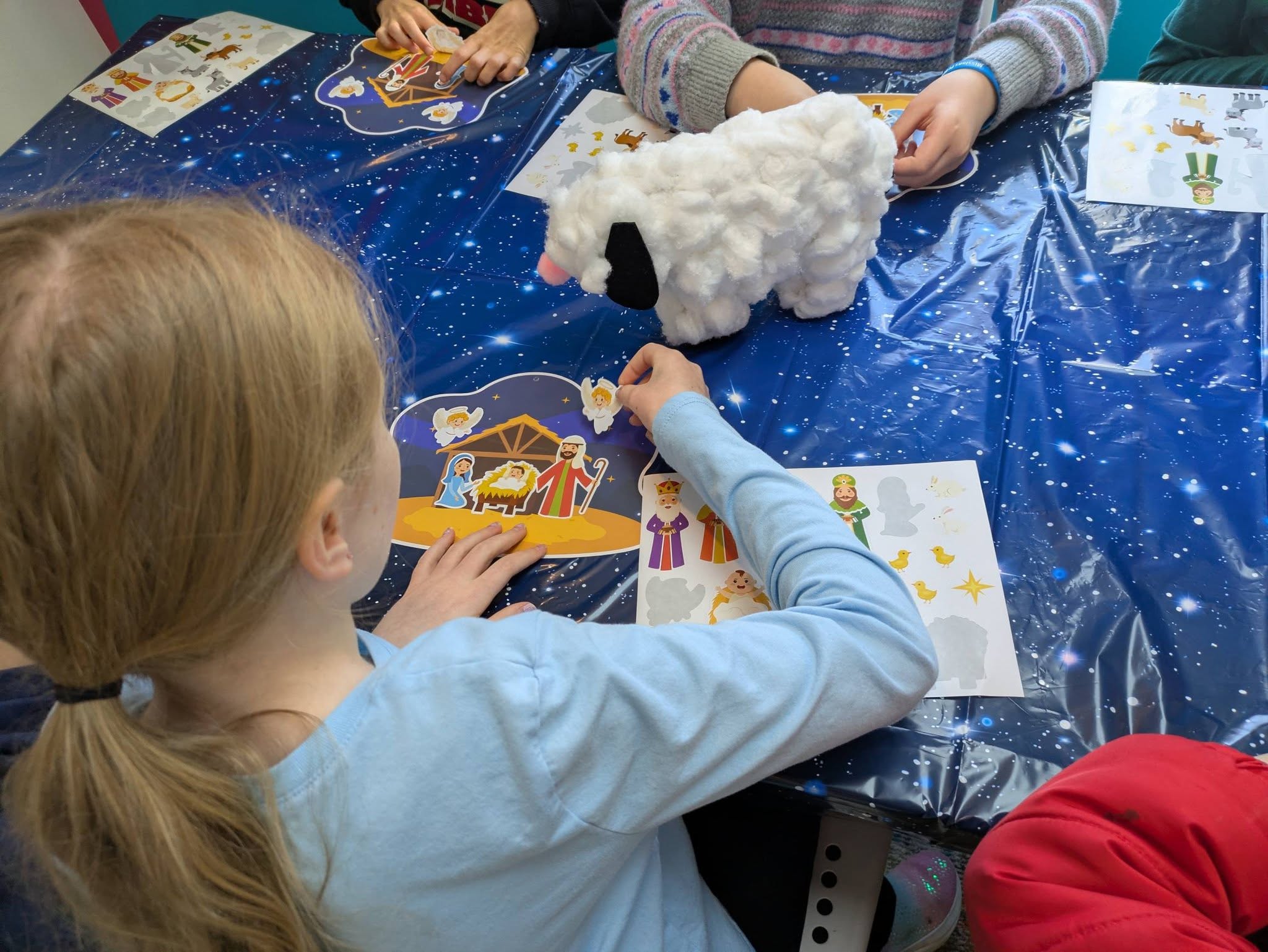
- 11:00am – Nativity sticker craft in another room (a creative break for kids and planning space for leaders)
- 11:15am – Stage students with props to learn shapes and body positioning
- 11:45am – Lunch break while the director reviewed staging
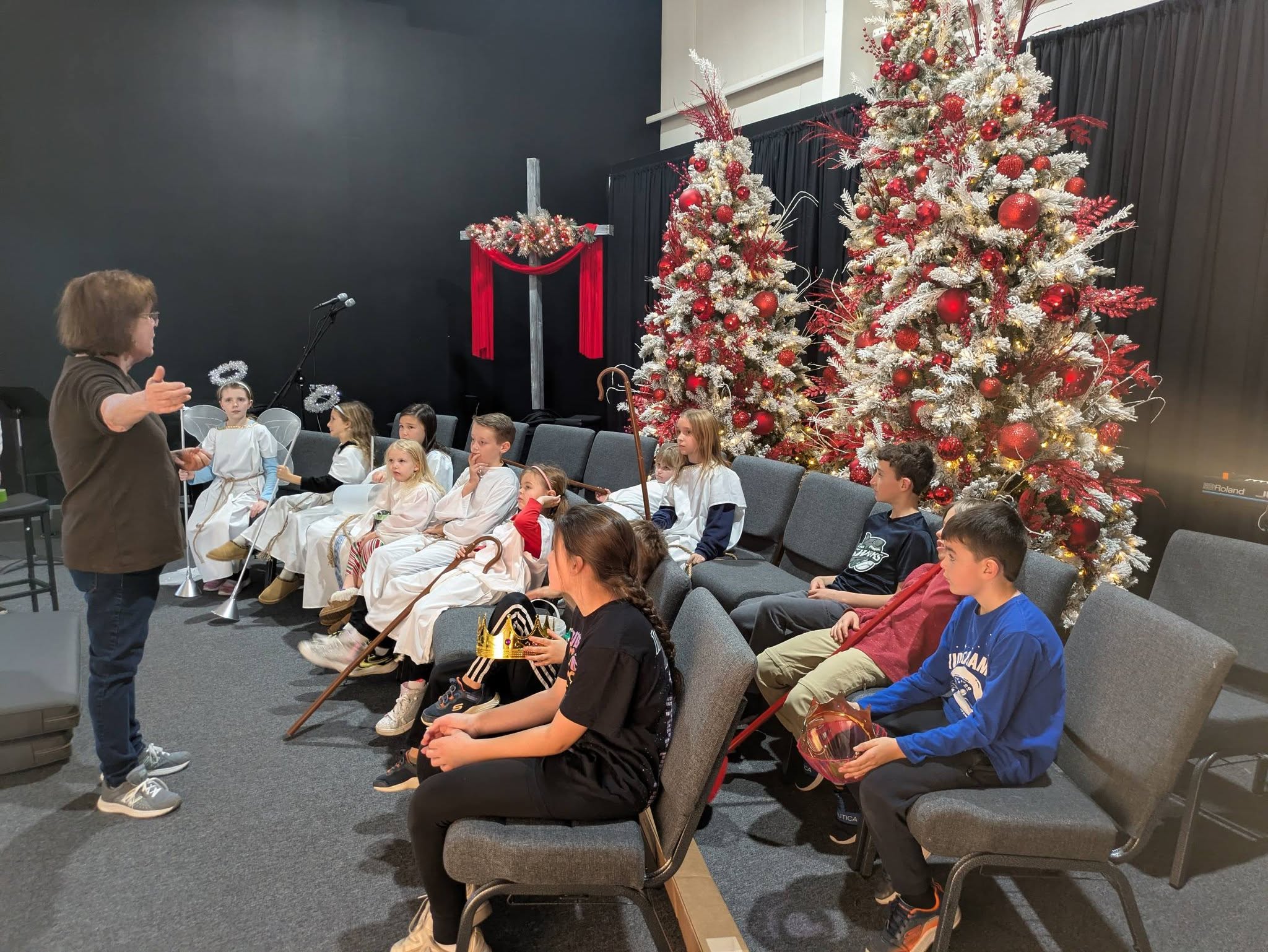
- 12:00pm – Costumes on; props in hand; dress rehearsal with floor marking
- 1:00pm – Outdoor break for fresh air walking around the buildings
- 1:15pm – Two full dress rehearsals with adjustments inbetween
- 1:45pm – Return to children’s spaces; label costumes; choose ornaments and receive plush baby Jesus keepsakes
One of the best conversations happened with our tech lead as we decided how to present the shadow play for livestreaming. We chose to capture the image on the monitors instead of the shadow screen—and it turned out beautifully. That choice allowed the segment to be easily shared on its own. Our incredible communications leader made it shine for sharing later in the week online.
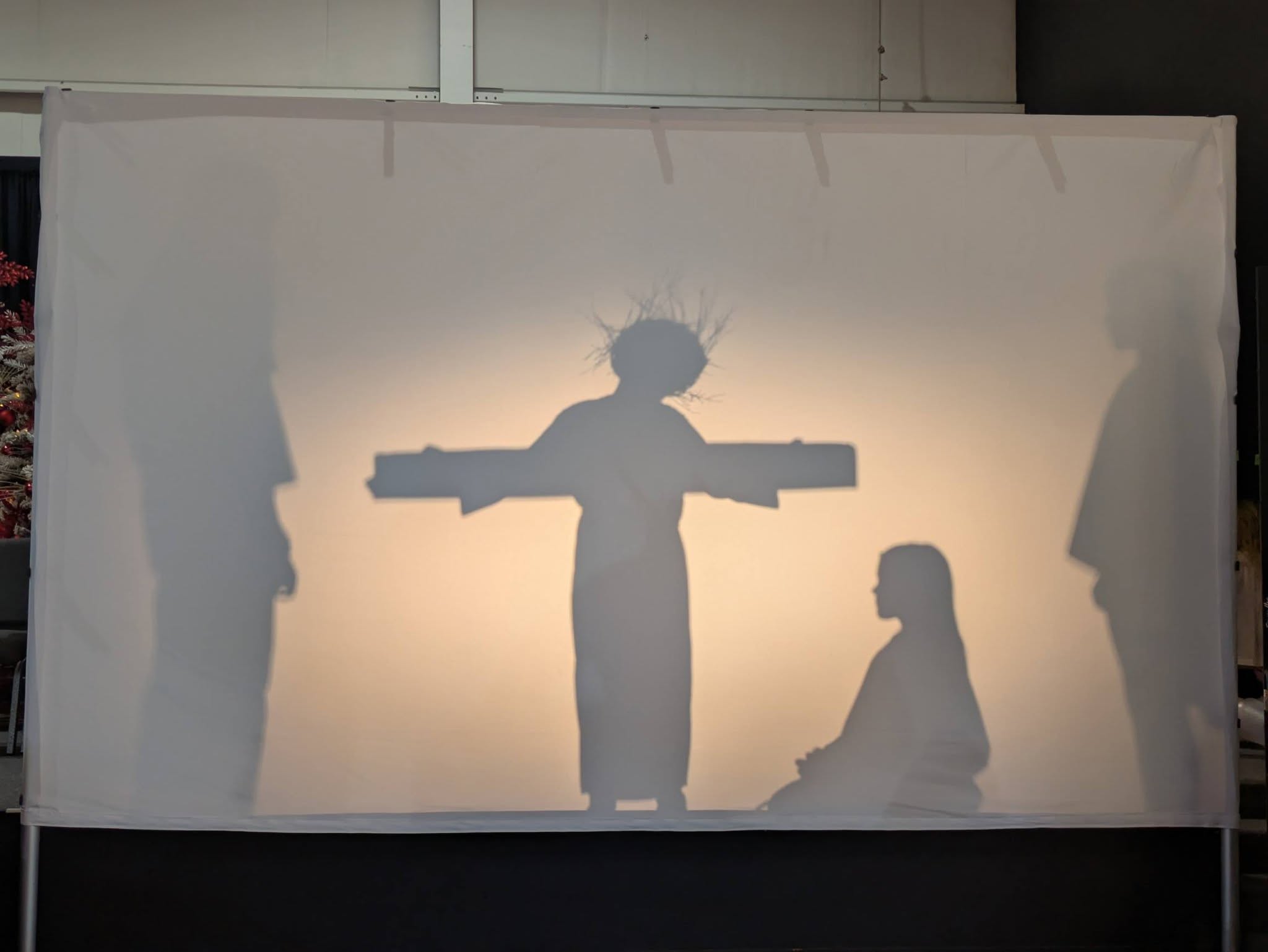
Perhaps the most joyful discovery of all was this: the children didn’t see the shadow play as a performance. They worked together as a cast, telling a story. No stage bow and they simply returned to their seats with their parents. Even more beautifully, our creative director expanded the ending to include the full story of Jesus—His death on the cross, burial in the tomb, Mary kneeling in grief, and His resurrection. The Gospel was shared in its fullness through song and image.
Because of this success, we’re planning another shadow play with music for Lent. With a major worship center renovation ahead and limited live-staging options, we’ll host another Hallelujah Camp on a Saturday during Lent and record the presentation at the conclusion of camp. The worship team will then choose the best moment to share the recording during next year’s Palm Sunday or Easter Sunday services.
Want to see it for yourself? Check it out here.
“All this took place to fulfill what the Lord had said through the prophet.” Matthew 1:22
 DeDeBullReilly
Pingback: Wondering to Jerusalem: A New Book & New Opportunities | DeDeBullReilly
Pingback: Walking Lent Together As A Family | DeDeBullReilly