
I remember a conversation with my colleague and fellow Jesus-gal, Vanessa Myers, when she shared that the Lord was leading her to follow up her beautiful Advent book, Wondering to Bethlehem, with a resource for the season of Lent. I’m happy to say—it’s here!
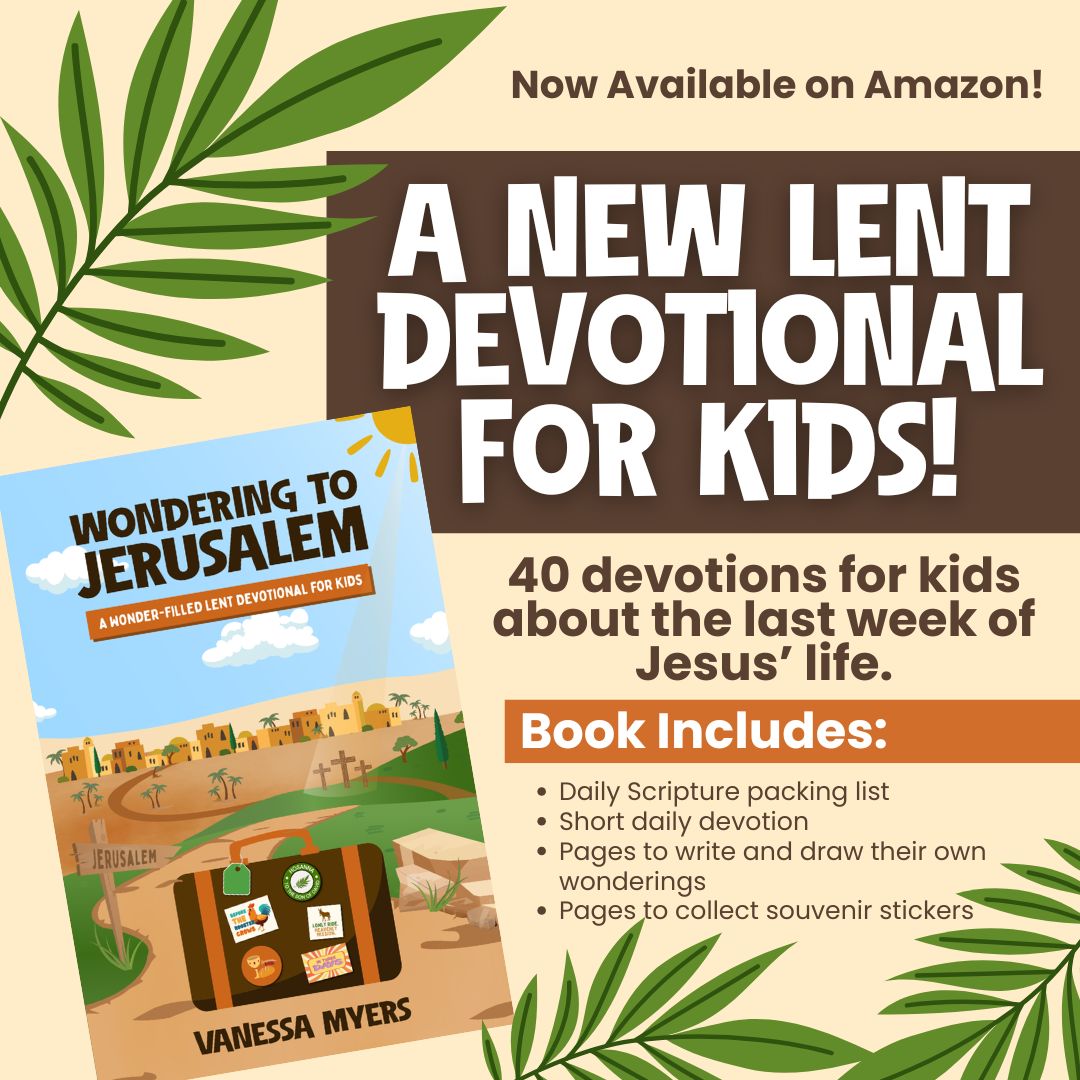
Wondering to Jerusalem: A Wonder-Filled Lent Devotional for Kids is written especially for children and for parents of littles who aren’t yet readers. It gently invites families to journey to Jerusalem during the final week of Jesus’ life on earth, leading up to His death and resurrection. Through simple readings and thoughtful “I wonder…” questions, it opens the door for meaningful conversations about this historically true event on which our entire Christian faith is built.
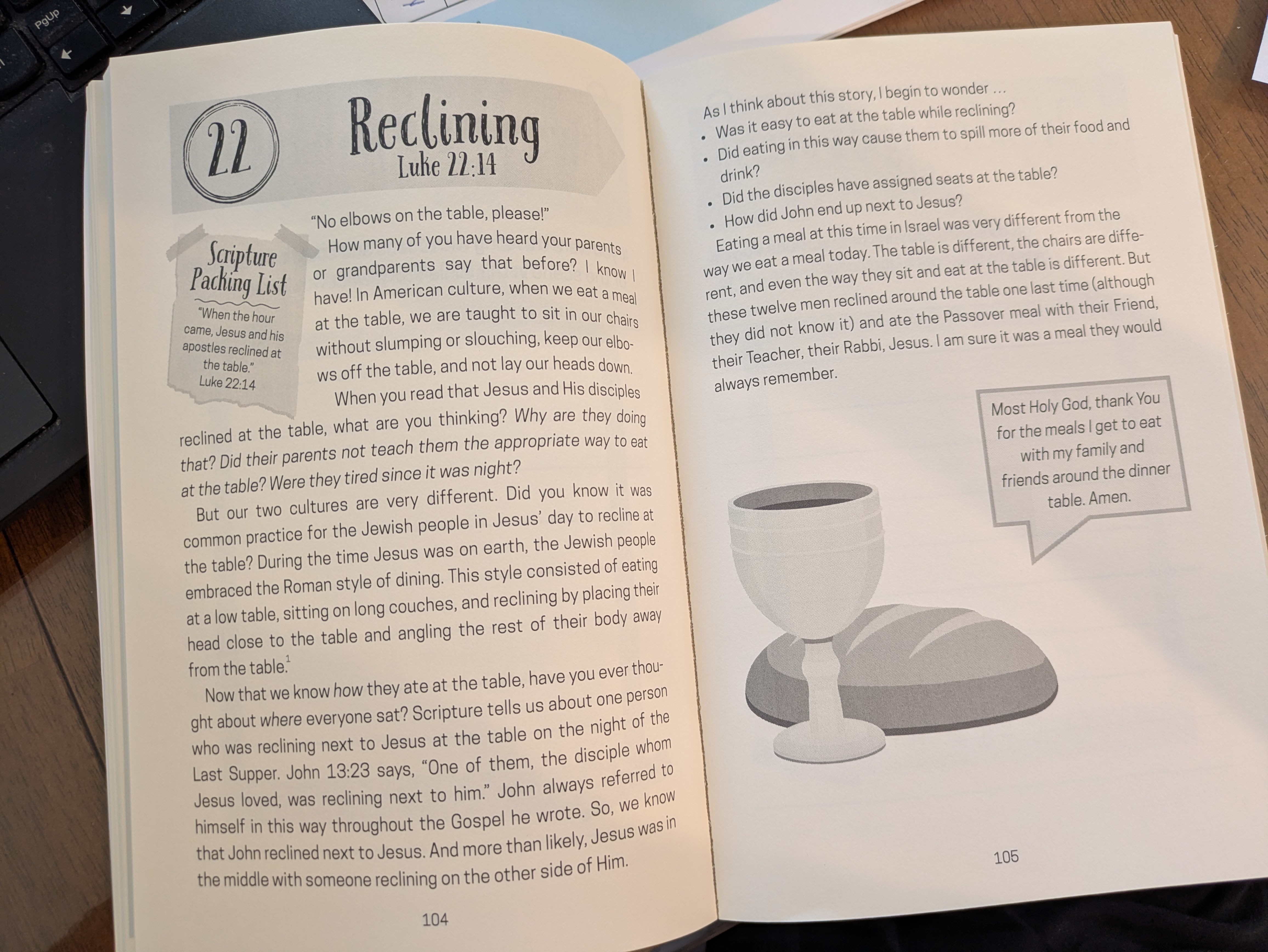
With forty devotions—plus three bonus entries—we travel with Jesus as He makes this final journey to Jerusalem. Each day includes a Scripture “packing list,” a short set of “I wonder…” questions, and a guided prayer, followed by a full journal page and space to draw a visual snapshot of the scene.
But this book is so much more than a kids’ devotional.
It has inspired me to design and prepare Children’s Moments for our church-wide worship services. The spiritual depth is remarkable—grounded in Scripture and supported by historical writings—for all ages and stages. From detailed information about the temple to helpful layouts in the appendices, to insights about donkeys and daily life, there is so much here. Even as a long-time Christian, I learned new, trustworthy details about the story that defines our faith.
So, what am I going to do with it? Great question!
First, I placed a bulk order for every student in K5–5th grade, as well as for each family in our nursery, to encourage daily reading and response from Ash Wednesday through Easter Sunday. I also ordered several extra copies to share at the Georgia Preschool Association Annual Conference in February and at a community event we’ll sponsor with a local senior living center on Palm Sunday.
Second, Vanessa has created a simple and meaningful Family Event, now available on her website. Our church is partnering with a local senior living center to host this event on Palm Sunday from 3–5 pm, outdoors, bringing together our families and the families of residents. The senior living center is providing the staging, sound system, some door prizes, and food—charcuterie cups featuring Middle Eastern flavors. Their Bible study group will offer hospitality, take photos at the photo booth, and engage families with “I wonder…” questions throughout the event.
Our local church team will bring the activity stations, photo booth supplies, and volunteers to connect with both church families and residents. We’ll also invite the families of our students and adults with disabilities to arrive 20 minutes early. We’ll close the event with a viewing of the recording of our elementary students’ shadow presentation of the song “King of Kings,” which we’ll prepare and record during Lent at the Spring Hallelujah Camp.
Vanessa Myers has generously offered to give one free copy of Wondering to Jerusalem to a blog reader. If you’d like to receive the gift copy (mine is already written in!), please comment by Friday evening—wherever you’re reading this—and share one of your favorite Easter or Lent traditions.
You can find information about bulk book orders here. You can also find the Family Event resource here, along with many other scripturally true resources for families and kidmin leaders.
I’d love to hear how you plan to use this wonderful resource in your own context. A children’s sermon? An at-home family resource? Special weekly programming? A Family Event or community faith-formation gathering?
Vanessa has diligently and faithfully done the hard work. What might this resource inspire for you?
“When Jesus entered Jerusalem, the whole city was stirred and asked, “Who is this?” Matthew 21:10


 DeDeBullReilly