
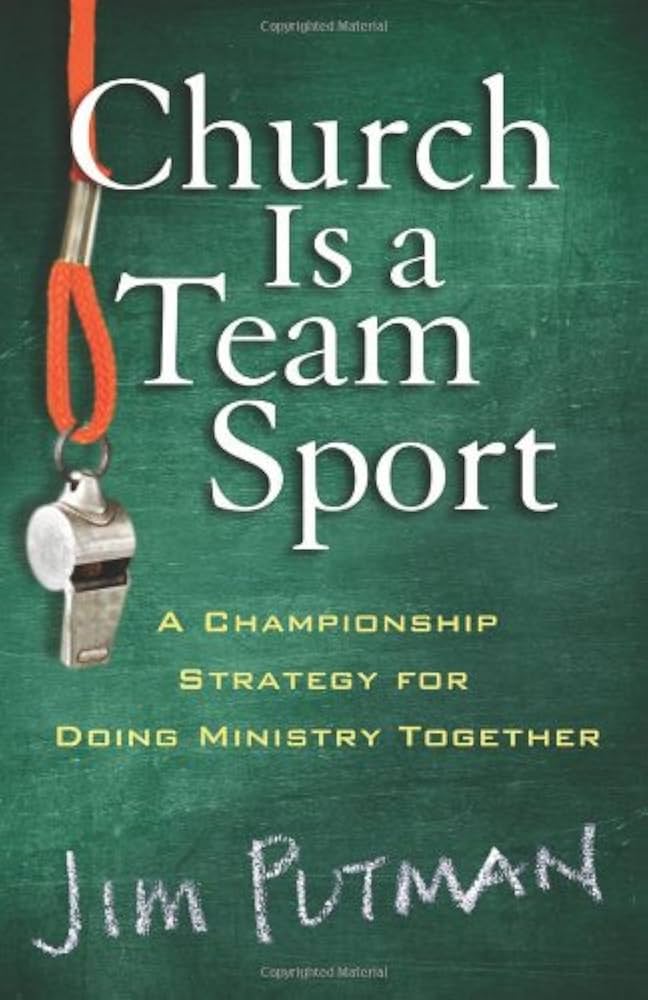
One of my amazing pastors mentioned a book in a recent staff meeting. It’s become a habit of mine to read or listen to anything our pastors mention, so I downloaded Church Is a Team Sport: A Championship Strategy for Doing Ministry Together by Jim Putman on Audible. There’s some good stuff here.

Jim Putman, a preacher’s kid who once felt disillusioned with the local church, shares how God redirected his dreams from becoming an All-American wrestler and coach to pastoring a thriving church in northern Idaho. Drawing from his background as an elite athlete and coach, he uses the language of sports to explain discipleship and leadership in a way that is clear, practical, and motivating. I especially loved the second half of the book.
One concept that stood out was the importance of a Playbook. Every winning team has one. In the church, a playbook preserves unity and direction. It clarifies who we are, how we operate, and what we prioritize. In a world where people consume endless sermons, podcasts, and algorithm-driven content, a clear playbook grounds a church family in shared philosophy and mission. Our Leadership Council just finished the task of compiling a Playbook for the church I serve. The Family Ministry Team I lead also has a Playbook with a few more ministry level processes and systems specific to ministry with children, youth, young adults, women, men, and seniors.
He also talks about recruiting team members. Great teams are always improving. Every believer has a role essential to the mission. We call the missing. We visit the sick. We pray with the hurting. And we release new leaders while coaching them relationally—with grace and intentional investment.
Then comes coaching. When an NFL draft pick joins a team, they must learn the system and language of their new team before they can execute the plays. The same is true in the church. We meet regularly to stay aligned with what “winning” looks like according to the scriptures.
At the church I serve, one way we live this out is through L3 meetings focusing on relationship-based, strategic, and high-level tactical discussions, often acting as a regular team check-in for performance, roadblocks, and collaborative decision-making.
- L1 – Loving: Where have you seen the Lord at work in your world?
- L2 – Learning: Staying teachable in our leadership—through shared training, resources, appreciation, and growth.
- L3 – Leading: Addressing team tasks, vision, dreams, and commitments.
Putman also describes coaching principles for disciple-making. We start with where people are. In sports, you assess skill level in practice and in the game. In discipleship, you watch, listen, and give space for growth as we listen for phrases from the stages of discipleship.
He outlines four discipleship phases people move through and offers lots of phrases from the phases:
Share Level – Those exploring faith or are Christian, but lacking relationships. Questions and doubts surface. Coaches help build foundational salvation understanding and holy habits.
Connect Level – People find belonging, relationships, often in small groups. Phrases include lots of “I” and “me” statements, but they are growing roots.
Minister Level – Hearts and actions begin to turn outward. They notice when someone is missing. They apply Scripture to real life and want to serve in Jesus’ name. This is where the disciple begins to see a need and desire to be part of meeting that need.
Disciple Level – Leaders who think strategically with an eternal perspective. They notice potential in others. They “catch and release,” helping move ministries and disciples forward.
The beauty of this framework is its clarity. Church really is a team sport. And when everyone knows the playbook, embraces their role, and invests in one another through sacrifice and humility, the whole team grows stronger—together.
“How good and pleasant it is when God’s people live together in unity!” Psalm 133:1
 DeDeBullReilly