The Oikos Principle

The Oikos Principle is a simple yet effective way to be intentional about loving people to Jesus. By embracing holy habits like prayer, witnessing, and everyday interactions, disciples who make disciples can share the love of Christ in a natural and relational way with people we already have a relationship with.

Oikos is a Greek word meaning “household” or “inner circle of extended family.” But in our daily lives, our oikos will include more than just relatives—it’s the circle of people we regularly interact with, such as neighbors, coworkers, classmates, teammates, coaches, grandkids, and even service providers like hairdressers, doctors, nail tech, barista, and landscapers. These are the people God has supernaturally placed in our lives, not as ‘projects’, but as future brothers and sisters in Christ.

A practical way to start is by making a prayer list of 8-15 people by name in your oikos. If you have kids or a spouse, put them on the list! Other family members, friends, or acquaintances who are part of your everyday life belong there, too. Our prayers are the fuel, simple yet powerful:

  • Lord, may [NAME] come to faith in Jesus.
  • Lord, though [NAME] believes in You, I pray they grow in their faith and hunger for Your Word.
  • Lord, may the decisions [NAME] makes honor and glorify You.
  • Lord, let my interactions with [NAME] draw them closer to You.
  • Lord, may [NAME] sense Your presence and encouragement.

When we pray consistently, God grows a boldness in us to talk about Jesus and reflect His love in our everyday lives. We become more caring, ask better questions, build trust, and make deeper connections. The Holy Spirit nudges us to reach out more often, to pray for and with our oikos, and to share helpful resources that speak to their challenges. Over time, we find ourselves being more generous, courageous, and attentive to the needs of those around us. We become more like the Jesus in the process.

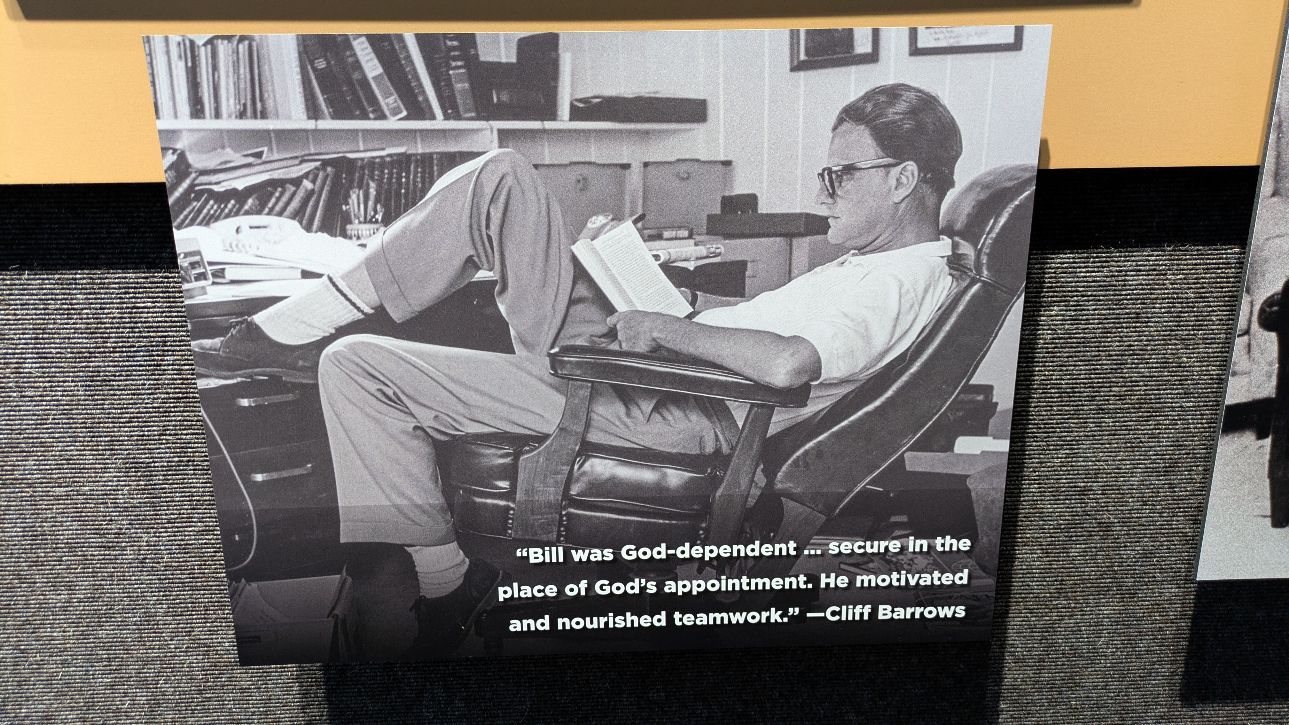
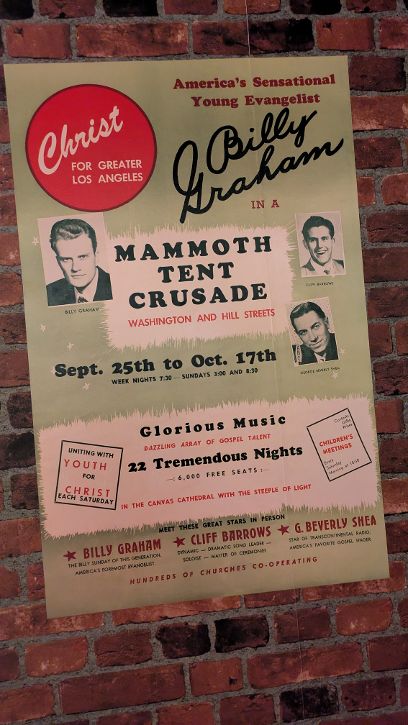
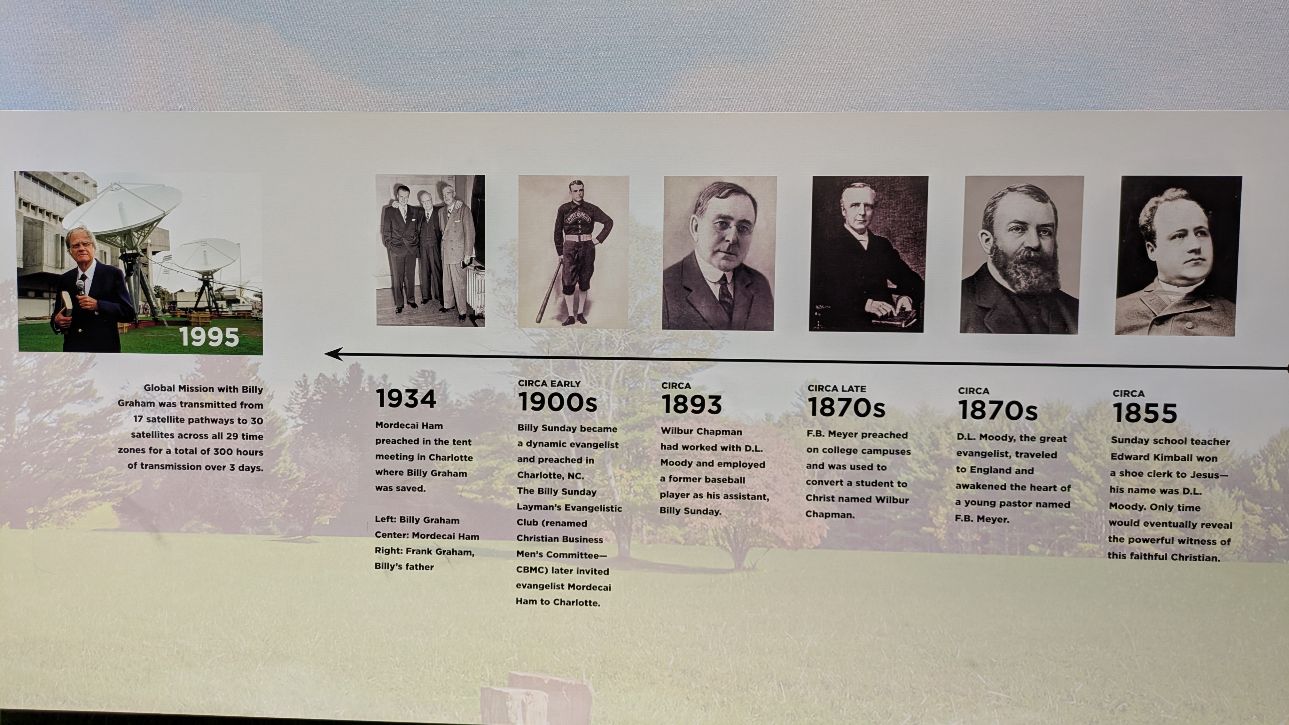
Krista Bontrager, known as Theology Mom, explored the Oikos Principle in a 2024 series of podcasts on evangelism through relationships already in place. This principle was pioneered by Rev. Tom Mercer of High Desert Church in California, offering a practical way for everyday believers to share Jesus as Christ commanded in the Great Commission. You don’t have to be Billy Graham to make an impact—you just need to be intentional about loving those in your oikos to Jesus.

In 2018, I was challenged by Dave Ferguson’s Hero Maker to focus on reproducing leaders in the church. Then in 2021, Dave and Jon Ferguson introduced the B.L.E.S.S. model—Five Everyday Ways to Love Your Neighbor and Change the World. Our pastors have taught this B.L.E.S.S. approach twice in the past year because having a plan, and modeling that plan, to reach neighbors and nations helps us live out our mission to make disciples of Jesus.

So, what’s your plan for sharing Jesus with your oikos? Whether it’s through B.L.E.S.S. or the Oikos Principle, I’d love to chat and encourage you on this journey!

“Come and hear, all you who fear God; let me tell you what he has done for me.” Psalm 66:16

The Power of a Plus-one in Ministry

A plus-one is more than just a guest’s companion at an event—it’s a partner, a teammate, and a co-laborer. In ministry, while I may be the invited guest to a meeting or gathering, I always pray for a plus-one to invite alongside me.

As a collaborator and verbal processor, having a plus-one brings so many benefits:

  • Clarity & Understanding – Someone to process what we just heard, ensuring I grasp what was truly taught. (I admit, sometimes I hear things that were never actually said!)
  • Follow-Through & Action – A partner to help implement the best next step rather than letting inspiration fade or me trying to invent a new wheel.
  • Shared Passion & Purpose – A teammate who will carry the vision forward—whether launching a new initiative, improving ministry security, sharing in teaching responsibilities, or rolling out new systems to best unify and maintain a healthy culture.
  • Continuity & Coverage – If I’m unable to attend due to sickness or emergency, my plus-one ensures our team still has a seat and voice at the table.
  • Discipleship & Development – Someone I can invest in, mentor, and grow alongside as we pursue a common mission. This is my chance to intentionally disciple another and grow into a deeper friendship-in-the-Lord.
  • Fresh Perspectives – A newer team member can bring fresh eyes, innovative ideas, and renewed excitement to familiar tasks.

This past Saturday, our first- and second-level church leaders gathered for a leadership retreat—an incredible time of scripture, table-life, Holy Spirit-led discussions, and foundational system-building for our work together in unity and love to make disciples who make disciples sharing Jesus with neighbors and nations helping one another grow in the image of Christ Jesus.

Since Family Ministry has such a significant influence on church culture, I intentionally invited a plus-one. I looked to those who recently joined our church—new members eager to serve. I also considered those stepping into serving in Family Ministry —bringing fresh perspectives. And I jumped at the chance to make a new ministry friend, introducing her to others and sharing the morning together.

We laughed, we prayed, we learned, and (mostly) completed our assignments—ha! The next day, after worship, we were still giggling in the aisle over a Holy Spirit-inspired idea that has us energized and ready to take action. We’re excited to serve, dream, and see where God leads this ambitious vision.

The next time you’re the invited guest at the ministry table of teaching, training, celebrating, and designing, prayerfully consider bringing a second (Grease!), a wingman/wingwoman (Top Gun!), a second chair (Band/Orchestra!), or a Titus (Paul!). Jesus never sent His disciples out one at a time, but rather in twos and threes up to seventy.

“Then after fourteen years, I went up again to Jerusalem, this time with Barnabas. I took Titus along also.” Galatians 2:1

Who Am I?: A Faith Milestone

Adolescence is like riding a wild roller coaster, full of twists and turns—physical, mental, emotional, and social changes all swirling together with a sprinkle of spiritual curiosity and a dash of hormones! It’s a time when questions pop up like popcorn, but the answers often seem a little fuzzy and tangled. So how can the local church help these young adventurers tackle some fundamental identity questions? Enter “Who Am I?”—a fantastic faith milestone for 5th and 6th graders!

The resources I curated to design a 4.5 hour retreat, 2 hours on Friday evening and 2.5  hours on Saturday morning, included:
“Understanding Me: Who Am I?” by Janine McNally
Psalm 139, NIV translation
“Who Am I?: Solving the Identity Puzzle” by Martyn Iles
“Enjoying God My Creator” by Kids Enjoying Jesus (some resources are free right now!)

To kick things off, the students decorated blank journals, sketched themselves on the first page, and jotted down three things that make them unique. I prepared a PowerPoint presentation combining elements from “Understanding Me: Who Am I?” and the free goodies from “Enjoying God My Creator,” sprinkled with teachings from “Who Am I?: Solving the Identity Puzzle,” and a few uplifting modern worship songs inspired by Psalm 139. Throughout our time, we scribed three verses at a time and read aloud often Psalm 139, dissecting the vocabulary and ideas that sparked our amazement of God’s care, preparation, attention, and love for His creation of people.

We tackled the myths surrounding truth, discussed the changes they’re experiencing, and explored how Christians have cherished human life for centuries. We recognized that we all stumble and fall, yet our Creator has already mapped out our identities. The conversations were nothing short of incredible, and our guiding mantra became: “We cannot know who we are until we accept whose we are.”

But the milestone isn’t just about the info—it’s about reconnecting! As these students grow up and engage in various age-level milestones, they get the chance to rekindle friendships with their church friends. By 5th and 6th grade, their social circles revolve around sports, dance, teams, and academics, but these moments at their home church allow them to grow in Biblical wisdom while sharing sticky faith-formation experiences. This not only deepens their relationship with their Savior but also strengthens their bonds with one another.

“Search me, God, and know my heart; test me and know my anxious thoughts. See if there is any offensive way in me, and lead me in the way everlasting.” Psalm 139:23-24

Blessings In Hand: A Weekly Tradition

One of the sweetest parts of my week happens at the end of Sunday School. After we’ve played, studied, laughed, responded, and prayed together, we wrap things up with three simple but meaningful steps:

  1. Everyone gets a fruit snack to take.
  2. Each child receives a take-home resource—something from Homepoint or our Sunday morning curriculum, Brite.
  3. Finally, every child receives a special hand blessing.

Years ago, Rev. Lauren Clawson introduced me to the idea of a hand blessing, and I instantly knew it was something I wanted to share with my students. It’s a beautiful way to offer a personal and individual blessing, connecting with four of the five senses—smell, touch, sight, and hearing—all in just a few seconds.

Lauren’s original idea used scented chapstick (with the label peeled off!), so with essential oils being so popular these days, it’s easy to create custom “anointing oils.” I usually go with citrus or orange for contentment and lavender for calm and peace.

Here’s how it works: when it’s time for dismissal, I meet each child at the door. I take their hand, draw the shape of a cross with the roll-on oil on the back of it, look into their eyes, and speak a blessing over them:

  • “Anna, may the Lord bless you and keep you and make His face shine upon you and give you peace.”
  • “Griffin, trust in the Lord always, and He will direct your paths.”
  • “Isabella, Jesus loves you—this I know, for the Bible tells me so.”

In January, we started using a new blessing inspired by Luke 2: “Cora, may you grow like Jesus, in wisdom, in stature, and in favor with God and man.”

For kids who prefer not to be touched with oil, I give them an “air blessing,” tracing the cross in the air in front of them.

One of my favorite moments is seeing them sniff the back of their hands during worship or share their blessing with a parent by rubbing hands together in the hallway. When they start repeating the blessings back to me? That’s when I know we’ve created a lasting faith memory—one they’ll carry with them for years to come.

“May my prayer be set before you like incense; may the lifting up of my hands be like the evening sacrifice.” Psalm 141:2

Wax On, Wax Off: Building Faith Muscle Memory

I love movies! There’s nothing like a good one to hit “reset” on my brain when it’s running in fifty directions. One of my all-time favorites? The original 1984 Karate Kid.

Here’s the gist: Daniel, the new kid, wants to learn karate. Enter Mr. Miyagi, his quirky and wise mentor. But instead of sparring lessons, Mr. Miyagi puts Daniel to work—painting fences, waxing cars, sanding floors. Over and over, Daniel follows these repetitive motions, confused and frustrated. “What does this have to do with karate?” he wonders.

The magic happens when Daniel faces opposition. Wax on; wax off. Sand the floor; side to side. Paint the fence. Don’t forget to breathe. Without realizing it, all those seemingly unrelated tasks trained his body. His muscle memory kicks in, and he’s ready—defense solid, movements instinctive.

And that’s what ministry with children and families can be like! We’re building faith muscle memory, truth muscle memory, and spiritual muscle memory so they’re equipped to defend and live out their faith. And our training centers on one historic, life-changing event: the resurrection of Jesus Christ, the Son of the one true God, creator and savior of the world.

How do we build these faith “muscles”? Here are three solid, foundational tools:

  1. The Lord’s Prayer – This teaches us how to communicate directly with God. Whether it’s a simple, heartfelt “HELP!” or the words of a prayer shared by Christians for centuries, it’s a powerful reminder that our God hears us.
  2. The Apostle’s Creed – This answers, “What do we believe?” It’s a backbone for our faith, keeping us rooted in the essentials while uniting us with the global Body of Christ.
  3. The Ten Commandments – These guide us in how to live out our faith, shaping our relationships with God and each other. Written by God’s own hand, they set His people apart.

Yes, there are tons of Sunday school curriculums with fun videos, creative themes, and hands-on activities. But imagine if we consistently showered kids and youth with Jesus while weaving in these three timeless teachings? We’d be equipping them with the essentials of our faith, shared by millions over the past 2,000+ years.

That’s the kind of muscle memory worth building!

“Praise be to the Lord my Rock, who trains my hands for war, my fingers for battle.” Psalm 144:1

Freedom to Explore and Experiment

Sometimes, the most profound lessons don’t come from a speaker’s slides, a workshop’s outline, or even a coach’s prayer. Instead, they’re whispered by the Holy Spirit—moving among God’s people, over lunch tables, coffee tables, Airbnb kitchen islands, and yes, even while waiting in line for Gideon Bakehouse cookies. This year, here’s what the Spirit made clear to me at CPC25:

Freedom to Follow the Spirit’s Lead

Yes, there were plenty of cool VBS themes with fantastic swag, but guess what? As a new church, we’re not tied to any of it. VBS isn’t part of our DNA, and that’s okay! Instead, we have the creative margin to lean into Spirit-led mission partnerships with a community that’s changing every day. Free from the pre-2020 programming church-world expectations, we get to explore, experiment, and innovate without competing with or copying the church down the street. That’s the gift of freedom—freedom to dream, freedom to follow, and freedom to be exactly who God has called us to be for such a time as this.

Discovery in Discipleship

Faith formation isn’t about scheduling more programs; it’s about equipping the real disciple-makers—parents, grandparents, teachers, and coaches. For us, that means less “morality entertainment” and more biblical worldview and apologetic truth. I’ve loved stepping into resource booths, skipping the “What are you looking for?” small talk, and leading with: “Let me tell you how we’re using your resources!” Watching their faces light up as they take notes or start recording my comments is a joy. We’re not just using tools; we’re tailoring them for our family of faith.

Deeply Familiar Faith

The eight-year-olds I serve today will be adults from 2034 to 2094. That’s a lifetime shaped by what they’re experiencing right now—the music, the games, the teams, and most importantly, the faith we’re helping form. The enemy’s goal is clear: disrupt God’s kids from doing God’s work in and outside of God’s house. But through relationships and multigenerational experiences, we’re building faith muscle memory that will stand the test of time. I’m leaning even more into Faith Milestones—layering holy practices that will feel as familiar as breathing when life gets tough and remarkable moments of life abound.

This year, I’m walking away from CPC25 with freedom, continued experimentation, and a renewed commitment to deeply familiar faith practices. And I can’t wait to see how the Holy Spirit will continue to move in and through our community!

“So Moses went down to the people and told them.” Exodus 19:25

Children’s Pastors Conference 2025 Ready

Right now, it’s Sunday. I’m sitting at the gate, waiting to board my flight to the 2025 Children’s Pastors Conference in sunny Orlando! This conference is my ultimate B12 shot—energizing my spirit, sharpening my mind, and filling my heart for the mission of leading families to Jesus.

What makes CPC so special? Oh, where do I start? I love the disciple-maker workshops packed with wisdom, the treasure trove of vendor resources (and yes, the swag is top-tier!), coaching for both rookies and veterans in ministry, and the incredible speakers from all over the globe who challenge and inspire us.

This year’s conference has an added twist: INCM (International Network of Children’s Ministry) is under new leadership. I’m eager to hear their vision for this amazing organization which historically equips and empowers leaders like me. Fun fact: my crew—a couple dozen ministry colleagues from around the country—has attended through multiple leadership transitions. And we keep coming back. Why?

Because this isn’t just any teaching conference. It’s a soul-feeding, disciple-making, life-transforming experience. It’s where we swap stories, celebrate victories, and laugh (a lot) in our shared AirBnB. We know the challenges and triumphs of each other’s churches, and we create a safe space to share our hearts for the families we serve.

Flashback to last year: our new pastors had just preached their first sermon, and my church was only six weeks old. CPC24 was my lifeline. I didn’t know what God had in store or how I could support the vision unfolding before us, but the Holy Spirit showed up in power. I walked away with everything I needed—resources for family discipleship, testing curriculum that knocked it out of the park, and unforgettable encouragement from speakers like Beth Guckenberger to persevere through the messiness I’d soon be faced with that only God could redeem.

This year, I’m surrendering all over again. I’m leaning into the Holy Spirit’s whispers, the music that stirs hearts, and the connections that build His kingdom here on earth. I’m ready to support my amazing friend and colleague in the resource center and embrace every conversation, every door, every window the Lord opens. His love for the littles—and their bigs—is boundless.

Only God knows what 2025 has in store, but I’m thankful for my church’s commitment to lifelong learning, their support for my outside-the-box ideas, and their encouragement in building the relationships that make ministry joyful and enduring.

So here’s my prayer: Thank You, Lord, for calling me to this space, this moment, and this mission. Thank You for letting me learn, dream, and serve alongside some of the most creative and passionate people on the planet. Let’s do this!

“In all your ways submit to Him and He will make your paths straight.” Proverbs 3:6

From Toast to Proverbs: Setting the Table for a Year of Discipleship!

As we wrap up Advent and dive into the 12 days of Christmas (from Christmas Day to Epiphany Sunday), we’ll gather together as one big church family for worship. On these in-between Sundays (Christmas and New Year’s), there won’t be small groups for the littles, giving our dedicated servant leaders a chance to relax, wonder, and worship with their families.

What’s happening the first Sunday back? We’re kicking off the New Year with a toast—literally! Introducing our Toast Bar, inspired by a colleague’s post from a Facebook group. Here’s the setup:

  • Toasters (borrowed of course!)
  • A variety of delicious breads (cinnamon swirl, raisin, pumpkin swirl, all the swirls, etc.)
  • Easy-to-use squirt butter and jam (because spreading is so last year)
  • And some surprise toppings to make it extra fun!

We’re encouraging families to dive into Proverbs—31 chapters for 31 days. To keep it engaging, we’re sending home scratch-off wise word prompts (thanks to Deeper Kidmin) for daily discussions and prayers. We’ve ordered scratch-off cards for February (28 chapters of Acts in 28 days) and March too, helping families build a habit of scripture reading and prayer together.

With the hustle and bustle of year-end seasonal ministry, we’re slowing things down ministry event-wise in the first few months of the year. By tapping the brakes on big ministry events, we’ll have a season to

  • Equip and train our leaders through workshops, labs, and faith milestones
  • Empower parents and grandparents with resources to disciple their kids and their kids’ friends
  • Grow in relationship with our great God and one another

So, how are you preparing for intentional discipleship in the new year? Let’s set the table for growth, together!

“There is a time for everything, and a season for every activity under the heavens: a time to be born and a time to die, a time to plant and a time to uproot, a time to kill and a time to heal, a time to tear down and a time to build.” Ecclesiastes 3:1-3

Live Nativity: Oh Come Let Us Adore Him

I love how the second chapter of Matthew’s gospel shares some extra details about the Christmas story the gospel of Luke never touches: Magi.

Some great insights into the Magi that make me smile . . .

1. We really don’t know how many wise men were in the entourage, only that there were three gifts. But allow me to share a precious friend’s insight…there were really 4 gifts.

Go ahead, I’ll let you run to your Bible and check out Chapter 2, verse 11.

Yep, the first gift was WORSHIP. THEN, they opened their treasures and presented him with gifts of gold and of frankincense and of myrrh.

Do I offer the gift of worship first?  Is worship a priority? Worship is anything I think, say, or do that tells Jesus, “I LOVE YOU!”

2. Mary and Joseph were Jewish. Shepherds? Jewish. Magi? Not Jewish.

This event was choreographed by a great God who invited those outside the Jewish faith to participate. This is where WE, the Gentiles, come in.

Am I living up to my starring role?  Or am I satisfied with being an “understudy” in the story He has for me?

3.  The Magi did not arrive at the stable as all of the Nativity scenes suggest.

Verse 11 continues, “On coming to the house, they saw the child with his mother Mary.”

This realization was a huge turning point for me many years ago.  While visiting what would become our home church during our time in New England, the pastor taught that the Wise Men didn’t come to the stable.  I just knew he had it wrong and went home on a mission to prove it.  Upon every reading of all three bibles we had in the house at the time, I discovered that I’d been relying on someone else or a plastic scene to tell me the truth of the scriptures.  I confessed it as sin and said, “No More!”  My journey through the scriptures and the life it gives began that very day.  Jesus was no longer on the flannelboard for this Jesus gal.

4.  Verse 12 shares that upon being in the presence of the Savior, “they returned to their country by another route.”

After I am in the presence of the Lord especially in the season of Advent, am I prepared to go home a different way?  I sure hope so.

Several friends have shared how this affects their Advent celebrations with family.  One exclaims, “Three gifts were good enough for Jesus, then three gifts are good enough for each one of my kids.” 

And then a young mother shared how her family models what the Magi brought Jesus in three gifts:

Frankincense (used by priests in their offerings to God, pointing toward Jesus’ role as our high priest) – the gift should be good for your mind…books, museum tickets, lessons, learning opportunities, learning kits, etc.

Myrrh (a spice for a person who is going to die) – the gift should be something to aid healing or a practical gift…clothes, shoes, conference, a box of medicines for that college student who has let himself get run down due to final exams, a Bible or something that encourages the recipient’s spiritual journey.

Gold (a gift for a King – or maybe a princess or son of The King) – something extra, fun, shiny, sparkly…toy, game, jewelry.

In Daniel Darling’s book The Characters of Christmas: The Unlikely People Caught up in the Story of Jesus, he suggests this was probably a caravan of quite a few people. “It’s likely there were more than three wise men given how much of a stir they caused when they arrived in Jerusalem.” 

This I know: though I’ve heard and studied the account of Jesus’ birth over my entire life time, there is still more to learn, still more questions to ask, and still more delight to enjoy.

Oh come let us adore Him!

“And having been warned in a dream not to go back to Herod, they returned to their country by another route.” Matthew 2:12

Perspectives on Family Ministry Models

I’ve been absorbing books on family ministry since the first Christian bookstores started popping up in the 1990s. The first one hit me like a ton of bricks as a mom freezing in New England my first winter. The cover was red, I think it was by Tim Kimmel, and as a new mom I was on a mission to make sure my two littles, preschoolers at the time, would always know the Lord’s presence and directing for their whole lives.

If you are thinking of expanding or growing your ministry with children into a Family Ministry Model, have I got a book and guide for you! As a student of the Family Ministry Academy by Renewanation, the first book to read and report on is Perspectives on Family Ministry, 2nd edition by Paul Renfro, Brandon Shields and Jay Strother, with Kevin Jones. This paperback uses its full 222 pages to share three family ministry models as well as the celebrations and challenges of all three. It’s the best book on family ministry in layman’s terms I’ve ever read to offer clear, concise vocabulary, definitions, and what family ministry is not.

Within the two parts, Perspectives lays out the foundations for Family Ministry with a historical context with definitions of Family Ministry, followed by the practices of three models for ministry with families.

  1. Family- Integrated Ministry Model – nearly all age-level classes and events are eliminated; aka family-driven or family discipleship approach; best practices are clearly presented in Voddie Baucham’s Family-Driven Faith.
  2. Family-Based Ministry Model – congregation still maintains youth ministry, children’s ministry, senior ministry, and so on coupled with additional intergenerational activities, curricula, and events with each ministry sponsoring faith formation experiences designed intentionally to draw generations together; best practices are clearly presented in Mark DeVries Family-Based Youth Ministry which also equips families to care for spiritual orphans.
  3. Family-Equipping Ministry Model – age-level ministries remain intact ‘yet church leaders plan every ministry to champion the place of the family as a primary unit for discipleship and the place of parents as primary disciple-makers in their children’s lives’; when the church equips parents to disciple their children, and parents see the church as an active partner in the process; the church and home as co-champions.

There are a lot of voices speaking in this book in support of each model and graciously exposing the challenges that each model presents. As I read and re-read this resource I felt better equipped to define the goals of the family ministry I lead and offer clear measurables for transformational impact which we call ‘fruitful celebrations’.

As more and more local churches are drawn to a family ministry model of faith formation in areas which have been typically siloed, this is one of the best resources for those who are keepers of the vision and the stories as the local church seeks to equip families to love the Lord with their whole hearts for their whole lives.

Which family ministry model are you striving for?

“The mission of family ministry in today’s world is to accurately handle the word of truth while teaching a new generation the timeless message of hope and redemption.” Dr. Michael Anthony and Dr. Michelle Anthony, Perspectives on Faith Ministry, forward, pg xx