Hired From The Pew

Let’s imagine that you are the super volunteer at your church. You respond with an enthusiastic “Sign me up!” every time you read in the bulletin the church needs help. You are thrilled to be invited to the table where ministry designs are developed, plans for retreats are made, and you attend every training that is offered at church so you can be the best at whatever you do. You are living out the scriptural challenge of “Whether you eat or drink, or whatever you do, do it all to the glory of God” with joy and energy.

Then, a staff position opens up. Part time, but a paid position nonetheless. You can’t even sleep for the excitement that you have been “tapped” to do the work of the Lord in the local church you love.

OR…you were already “on staff” in a successful fee-based ministry working with paid staff building community relationships inside and outside the church.  The church comes to you and offers you an opportunity to be on “real” church staff in a related area.  It appears to be a natural fit for the church and for you, so you now have a seat at the table where vision is cast, calendars are negotiated, and relationships with church staff move to a whole new level as you work with paid staff some of the time and with volunteer/unpaid staff the other part of the time.

Six months in the position, you have your office somewhat in order, you find yourself working with 3 separate calendars, and trying to balance living your life with living out your calling to professional ministry.

This is the story of so many called into professional ministry, but not seminary.

We eagerly bring our gifts and graces to the altar of the local church with enthusiasm and excitement.  But once we can no longer be the super volunteer, our skills-set may be missing a few key components that are necessary to make for a healthy ministry.  But where do you go?  Who do you ask?  How do we effectively transition from doing it all to empowering others, leading by example, and growing a great forgiveness tank for ourselves and others?  How do we become a part of the professional team of servants God has called to lead the local church we love?

This is just a small list of areas I wish I had known more about in the beginning of my call into healthy and effective professional ministry:

  • leading a successful meeting
  • recruiting volunteers
  • conflict management
  • how to negotiate to a YES! with trustees
  • making a ministry budget
  • how to interview
  • how to fire/redirect a volunteer
  • how to say “no”
  • how to maintain healthy boundaries
  • how to begin the Safe Sanctuary process when it makes all the sense in the world to me yet not to others
  • how to market ministry inside and outside the church other than the bulletin
  • how to write a magnificent newsletter article or a press release
  • how to set calendaring priorities
  • how to set up a networking group of folks outside my own house/church and making it a priority to build those relationships (did this anyway, but not sure I did it right)
  • how to train volunteers, find volunteers, stop being the only volunteer
  • how to soothe and heal the wounds made by stained glass
  • how to make balloon animals
  • how to talk about God that is in line with my denomination
  • how to study the Bible on my own (because being on church staff means that worship is different now)
  • how to build a team
  • how to make the committee system work efficiently
  • self-care (and I’m not talking about a facial)
  • the structure of a healthy church
  • how to interview for a church job
  • how to prepare a resume’ for a professional ministry position
  • how to interview a church
  • how to strengthen the ideas and creative energies of others
  • how not to be a horse’s patoot to my family when there is so much going on

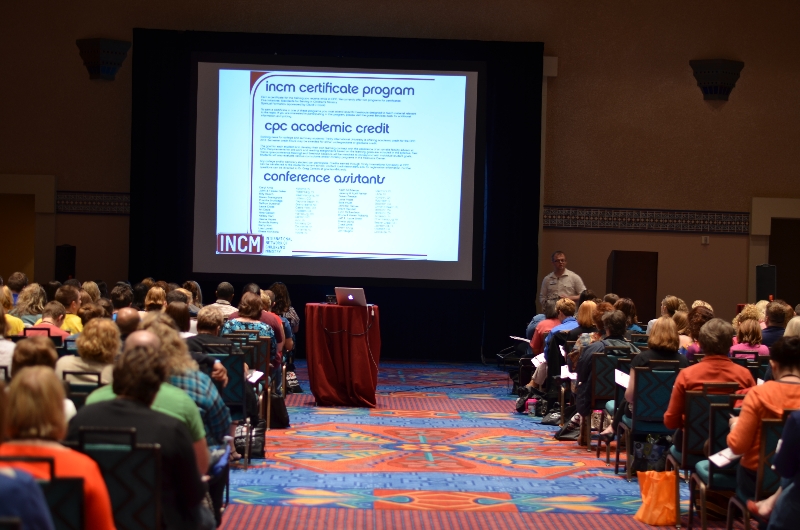
What if… there was training offered, close-by (really, really, really close-by), inexpensively (really, really, really inexpensively), in bite-sized pieces, over a one or two year period of time, giving you access to people who are the best at what they do (which is what you do)?  Where your natural gifts and graces are influenced by people who have gone before you professionally and are spiritually healthy?  Where you don’t have to re-invent the wheel when it comes to building the best practices of professional ministry in YOU to bring back to your own church?  When you can take everything you learn over a couple of days and implement it on Monday morning? When this event is ongoing, meaning a Friday/Saturday in the fall and a Friday/Saturday in the spring, because we are in this over the long haul?

Would you go?  Would you send someone?  What else would you want to learn?  Or maybe better to ask, “What do you need to know RIGHT NOW?”

KidMin Top Ten Thankful List 2012

Thanksgiving weekend 2012 begins and ends in flannel pajamas with great kitchen smells and calendar newsletters of what’s coming up during Advent on every flat surface. Before I dive into the Advent season with deep-sea-scuba-gear, it’s good and healthy to give thanks for what has made 2012 rock for me this year:

10. Colored Printer Ink…eye-catching newsletters and notes in color are remembered best. Staples has a buy-one-get-one sale on printer ink once a year and I am there to stock up so it doesn’t kill the Office Supplies budget.

9. Children’s Council with a “Spirit of Yes…the faithful attendance and prayers of folks who have full calendars, sleepless nights, and willing hands of service for the kids we have and the kids we don’t yet have. They do for one what they would do for a hundred if we had them.  They believe that if we are faithful with a few, He will bless with many.  They are willing to try anything that furthers the cause of sharing the love of Jesus and they each serve as Champions in their areas of giftedness. I love them all.

8. Sabbath Days…Those of us called to professional ministry find that “what we do is who we are”.  Setting a day aside each week to read, pray, sleep, watch a corny movie, have lunch with a girlfriend keeps me sane and from turning into the “church lady”.  And when your church family honors your Sabbath day it makes this “acts of service is my love language” gal feel…well, loved.

7. Church Secretary…she knows where all the skeletons…er sacred cows are. And when she volunteers at all the major KidMin events she becomes the closest of friends. She gets my heart and knows what it takes to soften one.

6. A regular pay check…Mr. Bob says, “Thanks!” Every time the offering plates are passed by the saints of the local church, I remember that the only reason I am on staff is because of faithful and regular givers to the work of God in the local church.  Not a Sunday goes by when I am not reminded that these folks “choose” to give because they serve a generous God.

5. Mr. Bob…known as a “church-widower” has supported and been “my people” more often than many know. He believes in what we do and supports our church families with his prayers, his presence, his gifts, his service, and his witness. I am so proud to be his wife for the last 29 years.

4. KidMin Network Friends-in-the-Lord…You know who you are and you also know that I have very few real gifts except having access to very gifted friends.  From Children’s Pastors Conference and Confirmation to No Sweat Summer Camps and Messy Night, I can’t imagine sharing life and ministry without you. You truly are the best at what you do.  Thank you for letting me play in your sandbox…or ketchup.

3. iPhone…to email and communicate with fantastic leaders and young disciples makes me downright giddy. One of my tweeners got an email address for her 10th birthday…guess who made her “important announcements” list?

2. A generous and kind senior pastor…I have worked for the most amazing pastors who have taught me how to “do” ministry and not “turn into a ministry”. I have learned from every single one. I have been encouraged and forgiven. I have been protected and challenged.   I am still in professional ministry because I have been shown Christ and pointed to the scriptures.

1. Starbucks…This is where I have learned about the families I serve, the students I love, and laughed my head off with old and new ministry partners.  This is where I meet with the Saints Book Club for students 3rd-5th grade and where I have met with a precious prayer partner for almost 5 years.

Venti… hot tea… Vanilla Rooibus; please leave room for milk.

Would you add anything?

Christmas Experiences for Little People

Family_Christmas_fun_094_007The following is the article written for the October Georgia Preschool Association Newsletter specifically prepared for weekday ministry to little people. Any opportunity I get to share Jesus with little people through taller people, I am all in. But I have used this tree and the box of goodies to dress it every year in ministry with children. I hope this provides a way to tell His story that is memorable, helpful, and sticky!

Telling the Christmas story with a small lighted tree in any classroom can take the whole season if you use the following fun ornaments by hot gluing a pipe cleaner or ornament hanger to these everyday items:

A white feather (Angel) Luke 1:28 “The angel went to her (Mary) and said, “Greetings, you who are highly favored! Do not be afraid, the Lord is with you.”

Drape a long pastel ribbon through the branches to represent Mary, a young girl about 14 years old, who may have worn a ribbon in her hair (Luke 1:26).

Attach a hanger to a wooden bench (found at Hobby Lobby doll house area) to represent Joseph, baby Jesus’ earth father who was a carpenter (Matthew 13:55).

Hot glue a hanger between 2 plastic coins to share that Mary & Joseph went to Bethlehem to sign up at the census to pay taxes (Luke 2:2).

Small hotel soap in a box/bag is hung as there was no room for them at the inn/hotel (Luke 2:7).

Take strips of white cloth that are tied into knots for a long garland to drape around the whole tree as swaddling clothes (Luke 2:7).

A candy cane can be used as a shepherd’s staff (Luke 2:8). Find a sheep/lamb that can be hung to speak of a shepherd’s job (Luke 2:8).

Another feather for when angel announced the birth of the baby to the shepherds, saying, “Do not be afraid!”(Luke 2:10).

This is my favorite part:

Plug in the lights (I use a foot switch) and the whole tree will light up like the sky above the shepherds when the host of heavenly angels filled the skies (Luke 2:13-14).

Make an aluminum foil star (this is a kid’s tree, remember) to place atop the tree (Matthew 2:1-2).

I found a great little teddy bear ornament to hang to represent Jesus as a child for when the wise men actually arrived at the house where the child and his mother lived (Matthew 2:11a).

Then add 3 gift boxes beneath tree with items of gold, and cotton balls or items that smell to represent frankincense and myrrh (Matthew 2:11).

Be sure to add a beautiful cross on a ribbon, chain, rope to share that Jesus came to take the punishment for our sins when He grew up so we could all go to the big party in heaven (Matthew 28:5). This will certainly help with the transition in a few months of Jesus as a baby and then His resurrection in just a few short months.

Here are a few of my favorite Christmas centers to share all month long:

Fine Motor – Punch holes around Christmas cards and tape a piece of ribbon to back and pull the ribbon through first hole and leave hanging for lacing; overturn a butter dish, spread minted-scented shaving cream frosting with a craft stick for a birthday cake for Jesus; children spoon cotton ball marshmallows across midline into plastic Christmas mugs filled with brown paper/cocoa for guests that come to visit during the holidays.

Language – Place Christmas items, even unbreakable nativity pieces, inside a stocking or oven mitt, and offer the chance to identify the item without looking.

Science – Tint water green or red with food coloring, and scent the water table with mint, cinnamon, or vanilla.

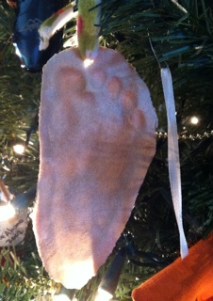
Art – Show children how to make baby footprints by placing the outside edge of their fist on a stamp pad, then carefully press them onto the paper along with fingerprints; make texture pictures by inviting students to glue stray or hay onto paper for prickly texture picture.

Indoor Play – tour the building for significant symbols of Christmas that you have discussed in class i.e. angels, candles, crèche, nativity, stars, bells, etc.; play “Looking for the Baby” by hiding a nativity baby Jesus from one of the nativity sets and let the students look to find the figure and use spatial vocabulary to tell where it is.

Pre-Math – Tape a piece of blue painters tape along the floor and invite students to make ABAB patterns with Christmas candy, wrapping bows, stars, etc.

Blocks – Turn your block area into a wrapping station with multiple rolls of tape from the Dollar store and pre-cut pieces of wrapping paper and the students wrap the blocks; sand paper or sanding blocks make for great conversation as students sand the rough edges of wood scraps like a carpenter.

Jesus came to save the lost, so we can go to the big party in Heaven. And who doesn’t want to go to a big party? And He’s coming back! Wouldn’t it be cool if He chose to come back during the Advent/Christmas season, the season when the whole world celebrates His coming?

Second Sunday Training

The Second Sunday in each month is one of my favorites. The “game day” atmosphere of Sunday worship, Sunday School (we call it GPS), and Children’s Church gets my blood pumping every week. But on the Second Sunday, we also offer CLUB345 for our 3rd-5th graders from 5-7pm AND we offer a Second Sunday Training Event from 2-4pm.

The purpose of the Second Sunday Training is to offer a regular learning opportunity to the congregation that builds relationships and offers information that can be used on Monday. The focus audience may differ from month to month, but it does give folks a chance to interact and build relationships around a skill.

Attendance has ranged from 2 to 25, and I’m good with that. We have grown to be able to offer free childcare which now allows couples to attend.

In the last 18 months we have offered the following trainings:

  • CPR and First Aid Certification (offered each September) for ages 14 through adult led by First Response Certified Trainer…this is the only one we charge for, but it is the fee assessed the Trainer and she/he is paid directly by the participant at the event.
  • Special Season (Advent) curriculum trainings for senior youth and adult leaders led by KidMin Director.
  • Introduce New Student Curriculum for adult KidMin leaders led by KidMin Director
  • Mr. Potato Head Teaches about the Body of Christ for youth and adult leaders of Children led by a guest KidMin Director
  • Journaling for ages 14 through adult led by a guest UMC pastor
  • Volunteer Appreciation Event for youth and adult leaders led by KidMin Director
  • Helping Your Child Transition to Youth Group for parents co-led by Directors of KidMin and Youth
  • How to Share the Gospel with a Child for adults led by Director of KidMin
  • Safe Sanctuary for ages 16 and above led by North Georgia UMC Conference Safe Sanctuary Trainer
  • Credit Unions: Setting and Keeping Financial Goals for 4th grade through adults led by a representative of the Georgia/Florida UMC Credit Union…this was also free, but our guy likes coffee, so a Starbucks giftcard is an appreciated thank-you gesture.
  • How to Share Your Faith for Youth led by Youth Director

What other ideas can you come up with to offer training for parents, families, students, students?

Why Are Bible Stories So Important?

As previously posted, infants to 2 year olds experience Undifferentiated Faith. When they see parents and teachers love on them and offer security and attention, they experience biblical teachings through relationships with persons who live the Bible message.

3 year old preschoolers then experience Intuitive-Projective Faith when the Bible becomes a very special book that tells about God and Jesus.

4 and 5 year olds through 11-12 go through the Mythic-Literal Faith stage which the Bible becomes very important. It’s like God wired these little disciples to be naturally drawn to hear Bible stories about persons who tried to live as God wanted. And they realize that the most important stories in the Bible are about Jesus. They like to handle bibles, say and sing bible verses, and thoroughly enjoy watching older persons using the Bible.

Robert J. Keely in Helping Our Children Grow In Faith (2008) stated, “We need to take advantage of this developmental readiness to share these stores with them in a way that allows children to live inside of the stories.” Children entering this stage are greatly influenced by the stories of faith, the stories of the faith of people around him/her, his/her own stories of faith, and biblical accounts of faith. Kids begin to connect these stories together , but don’t yet see them as one large story that starts, “In the beginning God” and ends with “Amen” which truly begins in the middle school years.

Story is important to all of us in our faith formation, but is is especially important at this stage, because it grabs their attention when they are not equipped to be taught through abstract reasoning. The bible stories help provide a standard of what is right and what is wrong.

These bible stories give children a sense of who they are and what it means to be the people of God. These are family stories and they are important at this stage in faith development. Like sitting at the table of a family reunion and hearing the stories of the family. We need to tell them often and we need to tell them well.

The language of preschoolers is activity, so we take the time to act out Bible stories and imagine what it might have been like to actually be there. In the story.  These stores are rich and deep and should not use them as a way to teach a moral lesson.  If we do this we will be merely giving children a checklist of dos and don’t s instead of introducing them to the stories of God and His people.  God introduces Himself to us in these stories and they help us know Him and know ourselves.

It is also at this stage of early and middle elementary years when miracles are entirely credible to these young minds.  No problem is too big for God and they can pray in complete confidence.  There is much for adults to learn when they are a part of the prayer life of such a young disciple.

These students of faith also enjoy hearing the same stories, singing the same songs, enjoying the same activities over and over again.  This dependability builds trust.  And since you, the teacher, are trustworthy and you speak of God as trustworthy, the child says, “I can trust God because I trust my teacher, and my teacher tells me God loves me.”

Our goal is to teach our kids that the Bible is exciting and relevant for them.  That’s why, when we finish a story, we want to ask the question, “What is the lesson learned here?” which is how an older preschooler through older elementary can make the biblical application to their lives.

What are you doing to more effectively share these family stories?

How Do Children Talk, Think, and Reason Their Faith?

“When I was a child, I talked like a child, I thought like a child, I reasoned like a child.” 1 Corinthians 13:11

I talked like a child…SONGS help us express our faith in God. Pairing words with actions helps them learn the songs more quickly. Sing songs about Jesus, God, church, and children. Songs like Jesus Loves Me, God is So Good, Deep & Wide, I’ve Got Peace Like A River/Joy Like a Fountain/Love like the Ocean teach our students how to praise the LORD!

Psalm 150:6 says, “Let everything that has breath praise the Lord. Praise the Lord!” In fact the whole psalm is a fun one for kids to act out in order to demonstrate praise. It talks of using stringed instruments, cymbals, a tambourine, and dance. Music helps children learn as music is located near the same area associated with long term memory in the brain. It doesn’t matter if you sing well or not. Songs of praise imbedded in a child’s long term memory…glorious!

I thought like a child…Children learn their first prayers very early.  are they learning the attitude of prayer and the places of prayer?  With frequency, Junior will soon learn that prayer is simply talking to God.  Tell them:  “You are a child of God.  God made you.  Jesus loves you.  You are important to God.”  4- and 5-year-olds can make up their own prayers and it is a joy for any listener.

I reasoned like a child…Preschoolers are at a great age to start memorizing Bible verses.  Don’t underestimate what a preschooler can accomplish mentally.  Psalm 119:11 says, “I have hidden your word in my heart that I might not sin against you.”   Set a goal of memorizing one verse a month – not only is it good spiritual training, but memorization is good for brain development and for strengthening intelligence.  To help a child memorize a Bible verse, take it apart into phrases and help your child learn the  pieces before putting it altogether as a whole.  Remember that those who take longer to memorize a verse usually retain it longer, as well.

Some great bible verses for little/all disciples to memorize include … Genesis 1:1, 1 Corinthians 10:31, Romans 3:23, Ephesians 4:32, Psalm 34:14, Proverbs 20:11, Isaiah 41:10, 1 John 4:8, Exodus 20:12, John 11:35, Psalm 34:13, John 13:34-35, Psalm 66:1, Hebrews 13:5, Psalm 119:18, 1 Thessalonians 5:16-18.  Post it notes are great, dry-erase markers on a mirror or window, chalk on a chalkboard-spray-painted sign are decorative and practical to get these in our own hearts and minds.

Luke 12:35 “Be dressed and ready for service.”

Faith On The Floor

There is some great research to help those of us who take the point in the spiritual journey of little people. In James Fowler’s book, “Stages of Faith,” Fowler considers the faith of little people up to about age 2 a pre-stage referred to as “Undifferentiated Faith.” This is when infants to 2s form their first pre-images of God.

That said, ministry and space provided to these little people should be about the very things that we would expect: Care and Safety.

Key biblical concepts for toddler and twos include “God cares for you” and “God made everything,” so be ready to get on your hands and knees to explore the world with this child! This is what I call “Faith on the Floor.”

The best things we can do at this stage is give them a place where they can be well cared or when their parents are absent and build in regular times for individual attention and hugs. Lots of hugs. Lots of love. Loads of adult attention, praise and encouragement in a safe, secure world of familiar people and routines.

Toddlers will experience God’s love and forgiveness through loving, caring persons, develop a sense of trust, experience prayer, begin to associate the name Jesus with certain pictures and with the Bible. And they can learn that the Bible is a special book.

Fowler refers to the next stage of faith as Intuitive-Projective faith which is found primarily in preschoolers 3 through age 5 is a direct reflection of parental faith.  These preschool disciples will imitate the faith of important adults in his/her life.  They may talk about God in human terms and have a mental image of God based on human characteristics.  They’ll learn from the simple Bible stories of people who choose to do right, to help, and to obey.  They are especially impacted by stories and themes that relate to what he/she experiences and knows in his/her daily life through repetition and ritual like at mealtimes, holidays, songs, and Bible reading from a child’s Bible.

As preschoolers get older, they enter into Mythic-Literal Faith, which lasts until around 11 or 12 years old.  Through sharing life with other people of faith, children learn that the faith they received from their parents is shared by other important people as well; they get a firsthand look at how older Christians live their lives and they see that all of church life – not just the kid’s part- is for them.  They are interested in God’s greatness, power, and supernatural abilities.

As we recognize the way children learn to walk, we can say the general order in which things happen, but we really can’t tell WHEN they are going to happen. The same is true about faith development. Faith is a gift from God and is a result of the Holy Spirit’s work in our lives an an amazing outpouring of grace. But these stages are important to acknowledge to be sure we are on point to how little people learn.

A Different Children’s Council Meeting

I serve alongside an amazing group of ladies who make up our Children’s Council. We typically meet each month. This year the agenda is made up of a chapter in “The Prayer Coach,” evaluation of what we have just finished, evaluation of what we are in the midst of, and the planning of what is coming up on the calendar. We open in prayer and we close in prayer. We go home and I send out minutes the following week.

This month will be different.

On Christmas Eve our pastor announced the theme for our church for 2012 based on 1 Corinthians 3:16, “Let the Spirit of God grow in you.” Understanding that all things of value are measurable, it’s time to evaluate. Personal spiritual evaluation can’t take place in a meeting. So, I have shared below how our October meeting will go.

Good Morning Faithful Servants of Wesley Chapel,

We had a regularly scheduled meeting for this Wednesday. However, unless there is something that we can’t discuss through email, I’d like to take this Wednesday’s meeting time and not meet together in person, but ask that we all take time that day/evening to reflect on the ministry God has called us to at Wesley Chapel.

As our theme this year has been to “Let the Spirit of God grow in you,” please take a few moments on Wednesday and see if that is the case. This time last year, you were “here” regarding your bible reading time, your closeness with Christ, your faithful prayer life, your service experiences, your spiritual relationships. Where are you now, one year later?

As a fellow Mom, I can attest to the adage, “The days may seem to last forever, but the years fly by.” It is as true of the lives of our children, as it is our own spiritual journey.

So, as we will not meet this Wednesday, please take 30 minutes and write it down, journal, meditate on where you are today, where we are today as a council/small group, where your kids are today in comparison to last fall.

Then for the next 30 minutes, prayerfully consider where you’d like to be next fall and set some measurable, intentional spiritual goals. The accountability of writing them down will help to provide some momentum. Sharing this journey with you is a joy and if we can share some accountability among each other, I am all in.

Baby Girl, although she just turned 25 years old on this earth, she will be 19 years old in the Lord on October 18th. We go through this process each year. We talk of how she has grown in her faith. We talk about how she plans to grow in her faith by setting spiritual goals for the next year. And I’ll be looking for a gift that is “round” to mail with her Spiritual Birthday package mid October, because God is all around His people  (Psalm 125:2). #1 Son’s Spiritual Birthday is in April. I  have to take him out to dinner to get his undivided attention. The food is good, but the tradition is even better.

I love you all and can’t wait to hear what God reveals to you,

DeDe

How are you measuring your Spiritual Walk?

Fire Bullets Before Cannonballs

“Fire bullets, then fire cannonballs. First, you fire bullets to figure out what’ll work. Then once you have empirical confidence based on the bullets, you concentrate your resources and fire a cannonball. After the cannonball hits, you keep 20 Mile Marching to make the most of your big success.” Jim Collins, Great By Choice.

I’ve been a fan of Jim Collins ever since he wrote “Good to Great” and I heard him speak at Catalyst in 2008. Although his material is considered “business”, I have found his research to be incredibly relative to church work. So much so, it’s one of the books I require when I mentor someone hired from the pew into professional ministry.

Collins’ book, “Great By Choice,” came out at last year’s Catalyst and I was intrigued by his comment, “Fire bullets before cannonballs.” So I put it to the test when the church I serve decided to offer mid-week ministry fall of 2011.

I am responsible for the children’s part, so we began to “fire bullets.” Bullet qualifications: low cost, low risk, low distraction. 

Low cost: By talking to folks who are faithful to being at church every time the door opened (or better, yet…had keys) we discovered there are many hobbies and skills they were involved with. A fellow KidMin Director was doing this on a much grander scale at her larger church and offered multiple skills at the same time.  I thank her for her creative genius.  We made a list of hobbies/skills that could be taught to little people who would use it for someone else (ministry/mission).  We then recruited folks to take on one month from November through April to teach their skill. I would arrange the opportunity to use it in ministry/mission. We taught Sign Language, Cake Decorating, Liturgical Dance, Beginning Spanish, Kids & Money, and Watercolor Painting. The instructors we recruited were already in our church, most already had supplies, and we offered a beginning and ending date by serving for a month of Wednesdays.

Low risk:  We offered the classes at different times from month to month (5-6pm, 5:15-6:15pm, 6:30-7:30pm, 7-8pm) at the discretion of the instructor.  This gave us insight to when the greatest number of kids would regularly come.  It would also give us a chance to build up a group of “regulars.”  By offering a different class each month at a different time, we were able to keep the kid’s interest for the skill being taught.  Faithful attendance would be an indicator that the kids really liked what was being taught and the timing either worked for families or it didn’t.  It also allowed us to affirm our intention that skills and hobbies can be used to honor the Lord.  We consistently offered good teaching and good “product.”

Low Distraction:  By working around the schedule of the new Wednesday night dinners and youth group, which was already in place, all the focus wasn’t on the programming offered to the children.  The Wednesday night dinners gave us an inter-generational meeting place to come and go, before and after the meals, which made for great relationship building.

Taking a whole season to fire bullets worked.  By the time we began planning to “fire the cannonball”  fall of 2012, we had fired enough bullets since last fall to give us an idea of what would be successful, when it would be successful, and the expectation that all we learn and do should be used for the glory of God.  So we came up with a name, decorated the space, and began talking it up.   Then we fired the cannonball in September 2012.

We are now focused on tweeking the programming to include more of what the kids enjoy, but we have fired enough bullets to know the best time, the best space, the most faithful, and new DNA of learning skills for ministry/mission has been woven into what we do.  We also recruited the music director to take on a 15 minute block of time and our kids are preparing to serve the Lord in various creative capacities in the contemporary worship service.

Are you firing bullets?  I’d love to hear about it.

The Right Shoes for This Season of Self Control

I have a pair of running shoes, but you won’t find me running in them.

We have a family membership at the local BodyPlex, but it seems every time that I decide to AGAIN get in a regular work out, I notice there have been upgrades and renovations that I missed.  Now we have to scan our membership key ring card to unlock the door as they no longer have a front desk attendant.  Which means that I have to be sure I have the right set of keys when I go.  One more thing I have to remember.

The voice in my head tells me that I need to make this choice if I intend on living a long, long time.  Now that Mr. Yummy has arrived I’m thinking of hanging around a really, really long time.

Self-control is the voice of personal discipline.  How is it that there are some areas in our lives when self-control is intense and actually increases.  And then there are others that a mere change in the wind, would have me toss my hands up in the air and ignore what needs to be done.

Gaining self-control has much more to do with going with what I know rather than with what I feel.  I never feel like getting dressed to work out, then having to take another shower, and again fixing my hair.  If I could ready myself within 30 minutes, I’d be more motivated to cut out a chunk of the day to go through the “getting ready” process again.  Or, if I just had someone to do this with, it’d be so much easier.

Self-control means we draw healthy boundaries for our behavior and choices.

It’s not like I eat bonbons in front of the TV, but carving out some time to take a walk…or stretch…or move to some of the 1980s exercise videos I still have in my basement, is something.  But mediocrity in any part of a life is, well, mediocre.  And what kind of testimony is that?

I’m grateful the Holy Spirit is our personal trainer, offering counsel and enabling us in the areas of our weakness.  Some days I need it more than others.

I’m headed to the health club this morning.  Not because I want to, but because it’s part of “walking properly.”  I will be the one lip-sincing to some Mandisa and Jamie Grace.

Romans 13:13-14 Let us walk properly, as in the day, not in revelry and drunkenness, not in lewdness and lust, not in strife and envy. But put on the LORD Jesus Christ, and make no provision for the flesh, to fulfill its lusts.